

The Zara Super Bowl: How Bad Bunny Showed Luxury Fashion is a Losing Game
how the biggest American media event further legitimized mass fashion
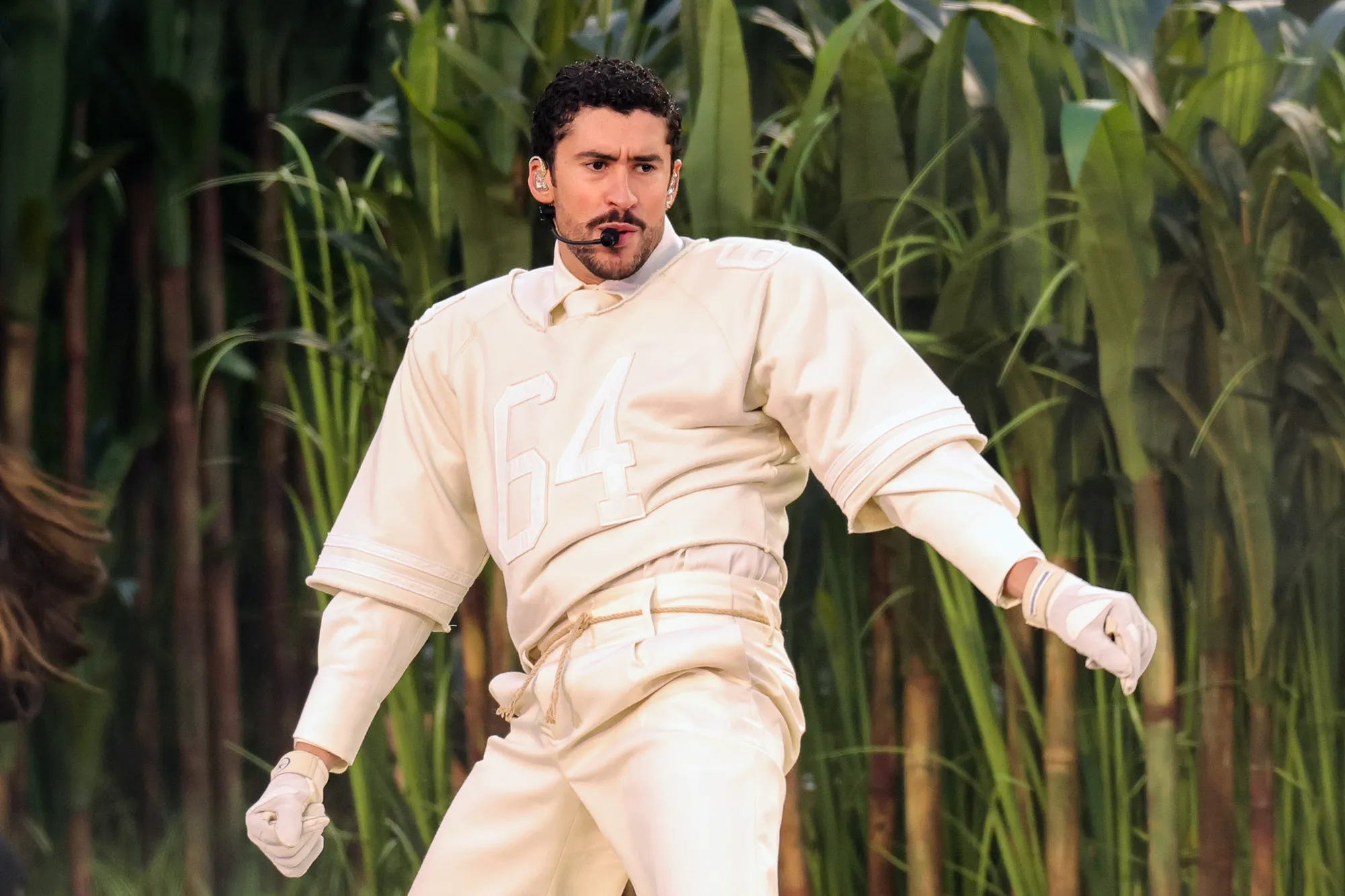
One of America’s most viewed cultural events just confirmed: luxury as we know it is on life support. On the surface, the world saw its first-ever Super Bowl performance delivered entirely in Spanish—a monumental cultural milestone for Bad Bunny and the Latino community. But while the world was vibrating to the music, the fashion industry was having a collective identity crisis. Why? Because the most-watched artist on the planet didn’t wear a stitch of LVMH or Kering brands.
He wore custom Zara.
🧵 The “Custom Zara” Oxymoron
Typically, “custom” and “high street” don’t live in the same sentence. But by choosing Zara for the biggest stage in the continental U.S., Bad Bunny’s team performed a masterstroke of business strategy.
The Power Play: It elevated the perception of a mass-market retailer to “world-stage worthy.”
The Window of Opportunity: Zara saw that the veil between the High Street and the Atelier is thinner than ever. They stepped into a prestigious space while consumers were already feeling “luxury fatigue.”
The Conflict: Of course, the naysayers are loud—and they have a point. Fast fashion’s supply chain issues and labor practices are a foregone conclusion. If it’s cheap, someone, somewhere, is paying the price.
📉 The Great Luxury Slowdown
However, the critique of Zara feels a bit hollow when the “White Glove” prestige of luxury fashion is being dismantled in real-time. We’ve spent years believing the high price tag on a designer bag was a direct result of “artisans in white lab coats.”
The Reality Check:
The Dior Scandal: It was recently revealed that a Dior tote retailing for 2,800 Euro costs roughly 200 Euro to produce. The math isn’t mathing for the garment workers.
The Loro Piana Allegations: Reports of underpaid wool farmers in Peru have chipped away at the “ultra-premium” facade.
The Quality Slide: Brands like Miu Miu and Chanel have doubled their prices in less than a decade while arguably undercutting the quality of their materials.
“The only incentive to pay for worse quality for more money is because I’m a slave to the name on the tag. And frankly? We aren’t in an environment where people feel that’s a good enough reason to spend their hard-earned money.”
🌊 The Pandemic Hangover & The “Free Fall”
Luxury fashion is currently in a monster slump of its own making. Post-pandemic, rather than inviting new wealth to raise their taste levels, luxury houses chose to cater to people with disposable income but little discernment.
By meeting the “least discerning customer on the lowest level,” these brands have effectively erased the distinction between themselves and Zara. When a luxury brand produces a “lazy” cotton polo and slaps a logo on it for thousands of dollars, they’ve invited the customer to go buy the dupe.
🚤 What’s Next: From “Stuff” to “Experiences”
If “stuff” isn’t special anymore, what is? We are entering the era of Experiential Luxury. Since luxury brands can no longer justify the price of their physical goods, they are pivoting to the one thing you can’t buy at Zara: Vibe.
Expect to see a massive uptick in:
Branded Resorts & Cafes: Dior beaches and Gucci bistros.
Yacht Collections: High-end travel partnerships for those who can make their money stretch.
Exclusive Destinations: Partnering with vacation spots to create “you had to be there” moments.
The “stuff” is in free-fall, but the lifestyle is just getting started. Stay tuned—it’s going to be a bumpy, albeit very well-catered, ride.
So…..who is still making real luxury?
If we’re going to talk about the “Free Fall” of luxury, we have to look at the conglomerates that started the fire. If you’re looking to invest your hard-earned money in a piece that won’t become a Zara dupe in six months, you probably have to look outside the LVMH portfolio.
Here is the deep dive into the 5 houses that are still prioritizing the “Art” in Artisan, while staying safely away from the LVMH machine:
