

The $6 Billion Exit: Why the Nordstroms Fired Wall Street to Save Their Business
and how a Mexican finance group is helping preserve American retail
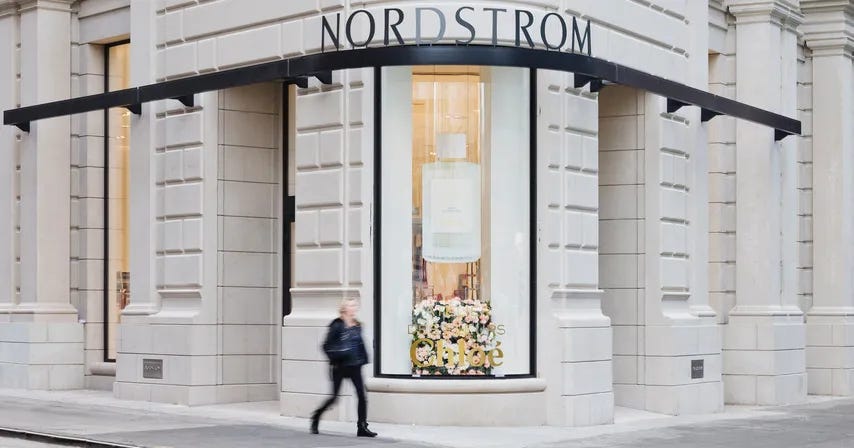
For decades, the headline for American retail has been a slow-motion obituary: The Death of the Department Store. It hasn’t just been a shift in consumer habits; it’s been a systematic dismantling of the regional retail landscape. We’ve watched the “Macy-fication” of local legends like Marshall Field’s and Montgomery Ward, and for the fashion vanguard, the 2019 shuttering of Barneys New York remains an unhealed wound.
But the most high-profile casualty arrived in 2026 with the bankruptcy of Saks Global. The ill-fated merger of Saks Fifth Avenue and Neiman Marcus was a “disaster in waiting”—a debt-saddled behemoth attempting to solve emotional retail problems with logistical tech-bro solutions.
While the giants stumbled over disconnected digital strategies and crushing interest rates, one fashion dynasty was quietly plotting a “Back to the Future” move. In May 2025, the Nordstrom family, alongside the Mexican retail powerhouse El Puerto de Liverpool, took their namesake company private in a $6.25 billion deal. This wasn’t just a buyout; it was a strategic divorce from the commodity trap of Wall Street.
The Wall Street vs. Luxury Paradox
The fundamental problem with public markets in the luxury space is that Wall Street’s demands are in direct opposition to a luxury client’s desires. Wall Street craves aggressive, quarterly, replicable growth. Luxury, however, is built on heritage—a word that implies something rooted, anchored, and resistant to the frantic ebbs and flows of a ticker tape.
When a 100-year-old entity is forced into a Private Equity (PE) model, the result is almost always “margin-squeezing.” To hit quarterly targets, management cuts floor staff, reduces inventory depth, and sharply increases prices without increasing value. We saw this with Hudson’s Bay—North America’s oldest company, a 400-year-old institution that faced bankruptcy after only a few decades of PE-style aggression.
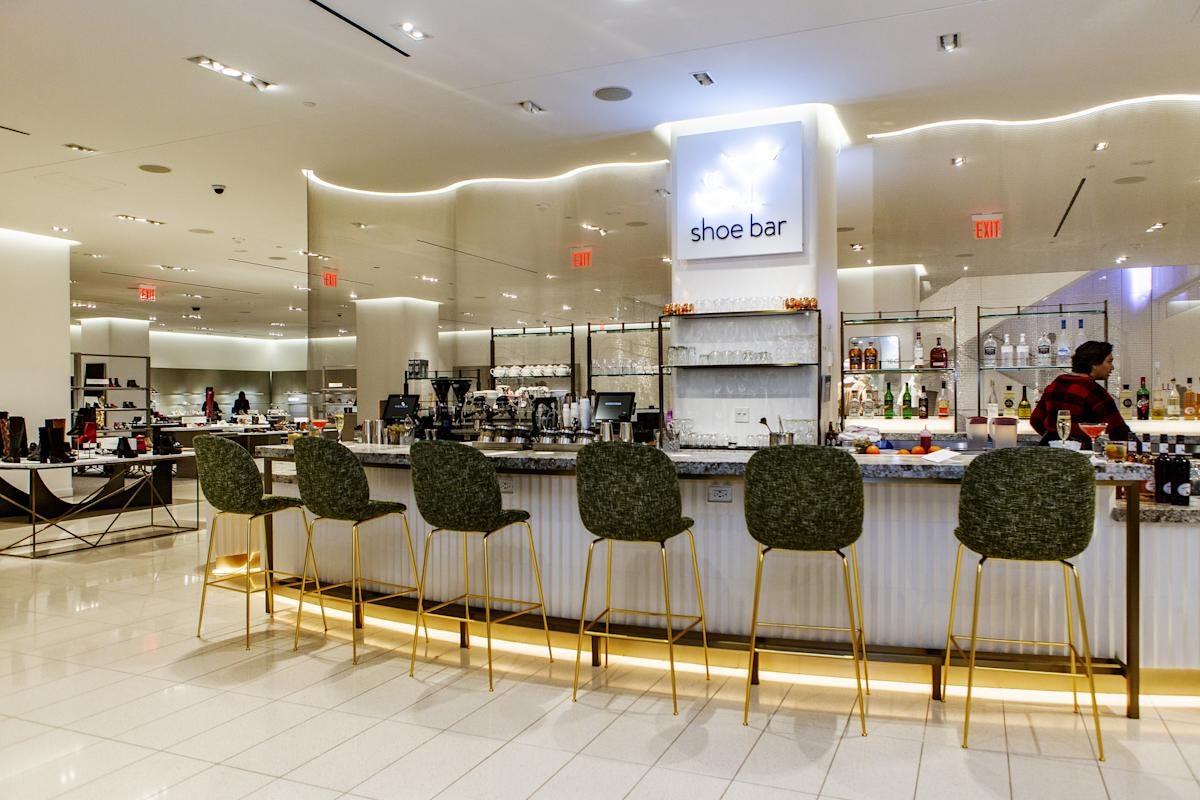
By taking Nordstrom private, Co-CEOs Erik and Pete Nordstrom bought themselves the “Right to Linger.” They no longer have to justify to an analyst why they have a ‘Shoe Bar’ in the middle of the sales floor instead of three more rows of high-margin racks.
Atmosphere as the New “Anchor Tenant”
If you want to save the department store, you have to give people a reason to stay. This is where Nordstrom is outperforming its rivals. While other stores are essentially becoming “order pickup hubs,” Nordstrom is harkening back to the service-first model of the 1950s—but with a 2026 edge.
The NYC Flagship is the exemplary model of this “New Heritage” approach. It isn’t just a store; it’s a social activation hub.
F&B Integration: With multiple food and beverage concepts integrated across every floor, Nordstrom has transformed from a retail space into a dining destination.
The “Experience-to-Transaction” Pipeline: Maybe a customer can’t justify a full-price designer bag today, but they can afford a drink at the Shoe Bar. That “aspirational entry point” builds emotional stability between the brand and the buyer. When that customer reaches their next professional milestone, Nordstrom is the destination already etched in their mind.
The Human Moat: Nordstrom is doubling down on stylist-led service. Unlike the “skeleton crews” found in struggling luxury stores, Nordstrom is spotlighting its team members as the “faces” of the brand. They recognize that in an AI-driven, digital-first landscape, a human relationship is the only thing e-commerce cannot replicate.
The Rack: An Acquisition Machine, Not a “Dumping Ground”
The strategic divergence between Nordstrom and the Saks/Neiman model is most visible in their off-price banners. For Neiman Marcus, Last Call was seen as a distraction that “diluted” their ultra-luxury positioning. For Saks, Off 5th was relegated to a selling channel for “residual inventory”—often unloved, crumpled merchandise that soured the customer’s perception of the full-price brand.
Nordstrom Rack, however, is a Feeder System. It is a standalone, profitable business that acts as the ultimate customer acquisition tool.
The 40% Rule: Roughly 40% of new Nordstrom customers start at the Rack before migrating to full-price stores.
Inventory Integrity: While rivals used outlets as dumping grounds, the Rack maintains a “treasure hunt” appeal with a mix of flagship clearance and strategic, premium “made-for-outlet” buys.
Omnichannel Synergy: By accepting full-price returns at Rack locations, Nordstrom drives high-intent, luxury shoppers into their off-price stores. It turns a return into a social discovery moment.
The Verdict for 2026
As Saks Global winds down its off-price operations and struggles with the weight of its own debt, Nordstrom is poised to be the next American luxury power player. They have proven that the way to save retail is not to become more like Amazon—it is to become less like it. It is about the thrill of a trunk show, the expert advice of a stylist who knows your “book,” and the 90 minutes spent over a coffee and a croissant.
In the rest of the 2020s and beyond, the premier luxury destination won’t just be a place to buy a product. It will be a place to spend your life. And for the Nordstroms, being private was the only way to keep that experience personal.
Is the “Quiet Comeback” the blueprint for the rest of American heritage retail? I’m watching the numbers closely. Let’s discuss the shift from transactional to emotional commerce.
Enjoying the Thoughtful Threads newsletter? Please consider the following:
Giving this post a 💜 and sharing it with any other branding aficionados you know!
Joining the party over on TikTok and Instagram (a work in progress but we’ll get there!)
Joining this community as a paid subscriber which helps support my work for less than a large coffee (or a one time coffee treat is fine!)
Sharing any interesting info/topics of interest/pictures of your furbabies to hithoughtfulthreads@gmail.com
Disclaimer
Some of the links in this newsletter may be affiliate links. This means that if you make a purchase through these links, I may earn a small commission at no additional cost to you. I only recommend products or services that I personally believe will add value to my subscribers. Your support helps keep this newsletter running and allows me to continue providing valuable content. Thank you for your support!